Best Way to Print on Dark Shirts (and Why Sublimation Won’t Work)
Why dark garments are harder to print, which methods work, which colors read best and how to prepare artwork so your logo or photo looks right on black, navy or charcoal.
The best way to print on dark shirts, for most orders, is DTF. The design is printed with a layer of white ink under the colors, so a yellow logo still looks yellow on black, and photos and gradients survive. Screen printing with a white underbase is the better call for large runs, vinyl suits names and simple shapes, and embroidery suits polos and caps.
The one method that will not work is sublimation. Its dye is transparent and there is no white dye, so on a dark shirt, cotton or polyester, the design disappears. This guide explains why, compares the methods that do work and shows how to prepare artwork so it looks sharp on black, navy, charcoal or any other dark color.
What counts as a dark shirt?
Black, navy, charcoal, dark heather, forest green and maroon are clearly dark. Mid-tones such as royal blue and red also behave like dark garments for printing.
A simple rule: if the shirt is anything other than white or a very light color, plan as if it were dark. For sublimation, only white or very light polyester works.
The Gildan G185 hoodie, for example, comes in black, navy, charcoal, maroon and forest green, and the Bella+Canvas 3001C comes in black and navy. Each product page lists the current colors.
Why are dark shirts harder to print?
Three things go wrong when an ordinary print meets a dark shirt:
- Inks and dyes are semi-transparent. On a white shirt, the fabric behind them is white and the colors look true. On a dark shirt, the dark fabric shows through and mutes them: a yellow turns muddy and a light blue turns gray.
- Sublimation has no white. Its dye is transparent and there is no white version, so nothing can lift a light color off a dark base.
- Dark artwork vanishes. Navy letters on a black shirt blend into the fabric, whatever the method.
To look right on dark fabric, a design needs an opaque light layer underneath, usually white, or it has to be made of an opaque material such as vinyl or thread. That is what the methods in the next section do.
Which methods work on dark shirts?
| Method | Works on dark shirts? | How it handles dark fabric | Best for | Watch out for |
|---|---|---|---|---|
| DTF | Yes | A layer of white ink is printed under the colors | One-offs, mixed orders, photos, gradients | A slight film feel; large solid areas breathe less |
| Screen printing | Yes | A white underbase is printed first, then the colors on top | Large runs of one design | A screen per color; not for one-offs |
| Heat-transfer vinyl | Yes | Opaque vinyl in a color lighter than the shirt | Names, numbers, simple logos | Solid colors only |
| Embroidery | Yes | Opaque thread | Polos, caps, jackets | Fine detail and gradients |
| Sublimation | No | Transparent dye, no white | White or light polyester | The design disappears on dark fabric |
Quick picks:
- One shirt or a mixed order, in full color or with a photo: DTF.
- A large run of the same one- or two-color design: screen printing.
- Names and numbers: vinyl, or DTF.
- Polos and caps: embroidery.
- A black polyester shirt: DTF or vinyl, never sublimation.
Why DTF is the best way to print on dark shirts
At VS Print Studio, DTF is the first method we recommend for dark garments. The printer lays down the colors first and the white ink on top of them, the film is pressed onto the shirt, and the white ends up between the fabric and the color. The colors stay opaque, and the same artwork looks right on a black hoodie, a navy tee or a white one.
What you gain:
- Photos, gradients and many colors on a dark shirt.
- No screens to prepare, so one shirt, a mixed order or different names are practical.
- Fine detail that vinyl cannot cut.
What to expect:
- A thin, flexible layer that you can feel. A small logo is barely noticeable, while a design that covers most of the front is warmer and breathes less.
- Bright, but not backlit. A screen glows and ink does not, so neon colors look calmer on the shirt than on your phone.
Read what DTF printing is and how it works for the full process. For care, turn the shirt inside out, wash cold on a gentle cycle and never iron directly over the print. Our guide on how to wash custom printed shirts has the details.
What about screen printing, vinyl and embroidery?
- Screen printing. A white underbase goes down first and the colors print over it. The result is bold and durable, and each extra shirt costs less once the screens are ready. Every color needs its own screen, though, so it suits a design with few colors and a large quantity. Our guide on how to order custom shirts for a group helps you plan one.
- Heat-transfer vinyl. Vinyl is opaque, so white, yellow or light blue reads clearly on black. It is crisp for names, numbers and simple shapes, but it is solid colors only: no photos or gradients.
- Embroidery. Thread is opaque, so it works on any shirt color. We use it for polos and caps, and it suits bold logos better than tiny text or gradients.
What about a black polyester shirt?
A black polyester shirt looks like a natural sublimation blank because it is polyester. But sublimation needs a light base, and black is the darkest base there is. The dye is transparent, so the design will not show.
On a black polyester tee, ask for DTF, or for vinyl if you only need names. If you want the permanent, no-feel finish of sublimation, choose a white polyester tee instead.
Which colors look best on a dark shirt?
- Read well: white, yellow, orange, light blue, bright green, pink and light gray.
- Need care: navy, dark green, dark red, brown and charcoal on a black shirt, and anything close to the shirt’s own color.
- Gradients: a gradient that fades to transparent fades into the shirt color, so decide where you want it to end.
For long outdoor events in a Houston summer, keep in mind that dark shirts hold more heat in the sun than light ones. If the group will be outside all day, a lighter color or a lighter fabric can be more comfortable.
How should you prepare artwork for a dark shirt?
You do not have to: we prepare the print-ready file. If you prefer to send a file, these habits help:
- Send a light version of your logo. A logo made for a white page, with black text, vanishes on a black shirt. If you have a white or reversed version, send that one.
- Outline dark elements. A thin light outline around dark shapes lifts them off the shirt.
- Avoid hairlines and tiny details. A line that looks fine on screen can break up in a left-chest print of 3.5 to 4 in.
- Rebuild soft shadows and glows. Shadows made for a white background turn into gray smudges on a dark shirt.
- Use a transparent background.
.pngwith transparency is recommended, and vector files are ideal for logos. - Size it right. 300 DPI at the final size: a full-front print is 10.5 in wide on a size S (3150 px) and up to 14 in on a 3XL (4200 px).
The print-ready artwork checklist covers file basics, and the T-shirt print size chart lists the print size for every garment size. For design ideas by garment color, see designing for dark and light garments.
How we handle dark-shirt orders
Tell us the shirt (or the model, like the Gildan G500) and its color, plus your design, an idea or only a description. For dark garments DTF is our default, and we look at the detail in your design and the quantity before recommending anything else. We prepare the print-ready file at the right size, show you a mockup so you can judge the contrast on the shirt color you chose, and print nothing until you approve it.
Most standard orders are ready in 2-5 business days after you approve the design. Larger or more complex orders may need more time, and the quote confirms the date. You can pick up in Houston or have it shipped across the U.S., and we answer in English or Spanish. Start at custom t-shirts, or read about bulk orders for teams and events.
Checklist: what to send us for a dark shirt
- I have the shirt model and color, or a photo of the shirt
- I have a light or reversed version of my logo, if the usual one is dark
- I have a transparent
.pngor a vector file, or an idea if I do not have a file yet - I know the exact text and where it goes: front, back, left chest or sleeve
- I know the sizes and the quantity
- I know the date I need it
Products mentioned in this guide
-
Men
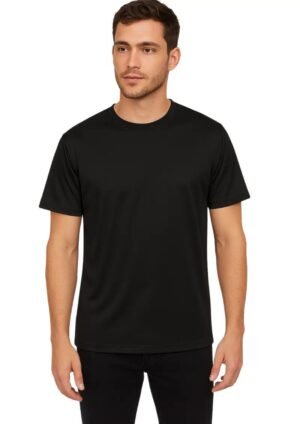
Black Polyester T-Shirt – Round Neck, Short Sleeve, Unisex
$17.99 Select options This product has multiple variants. The options may be chosen on the product page -
T-shirt
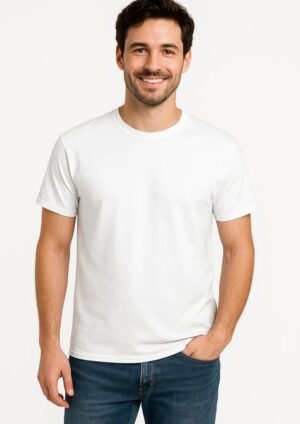
Gildan G500 Heavy Cotton™ 5.3 oz T-Shirt
$17.99 Select options This product has multiple variants. The options may be chosen on the product page -
Hoodie
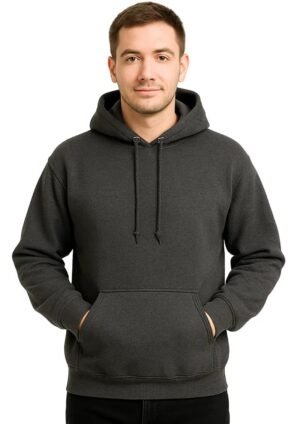
Gildan G185 Heavy Blend™ Adult Hooded Sweatshirt
$26.99 Select options This product has multiple variants. The options may be chosen on the product page
Frequently asked questions
What is the best way to print on a black shirt?
For most black shirts, DTF is the best choice. A layer of white ink under the colors keeps them opaque and bright, and it handles photos and gradients. Screen printing with a white underbase is better for large runs, vinyl for names and numbers, and embroidery for polos and caps.
Can you sublimate on a black shirt?
No. Sublimation dye is transparent and there is no white dye, so on a black shirt, whether cotton or polyester, the design barely shows. Sublimation needs white or light polyester. For a black shirt, ask for DTF, or for vinyl if you only need names and numbers.
Why does my logo disappear on a dark shirt?
Logos made for a white page often use black or dark colors, and those blend into a dark shirt. Ask your designer for a white or light version, or send what you have and we prepare it for the shirt color.
Is DTF or screen printing better for dark shirts?
DTF is better for one-offs, mixed orders, photos and designs with many colors. Screen printing is better for large runs of one design with few colors, because each color needs its own screen and each extra shirt costs less once the screens are ready. We recommend one when we quote.
What colors look best on dark shirts?
Light, bright colors read best: white, yellow, orange, light blue, bright green, pink and light gray. Colors close to the shirt color, such as navy on black, tend to disappear, so add a light outline or choose a lighter shade.
Can you print white on a black shirt?
Yes. White is one of the best colors on black. With DTF, a white design prints as white, vinyl comes in white, and screen printing uses white ink. Sublimation, by contrast, cannot print white at all.
Practical guides from our studio in Houston, Texas. We prepare your print-ready file, show you a mockup and print nothing until you approve it. Questions? Message us in English or Spanish. About us
More guides for you
What Is Sublimation Printing? What It Can (and Can’t) Do
A plain-English guide to sublimation printing: how the dye bonds, which materials work (and which never will), why white blanks look brightest and where we use it in Houston.
What Is DTF Printing? How It Works, Pros, Cons and Best Uses
A plain-English explanation of DTF printing: the steps, what it does well, where it is weaker, how it compares with other methods and when we choose it for Houston orders.
DTF vs Sublimation vs Screen Printing: Which Is Right for Your Order?
A plain-English comparison of the five ways custom apparel and gifts get decorated, with a decision table, honest limits and the rule we use to quote Houston orders.
Tell us your idea — we make it real
Send your design, your idea or just a description. We prepare the file at the right size and personalize it for you — in English or Spanish, by message or on WhatsApp.