Cotton vs Polyester Shirts: Which Fabric Should You Print On?
A plain-English guide to choosing the shirt fabric before you order: how cotton, polyester and 50/50 blends feel, which print method each one takes, and real examples from our catalog.
The short answer: pick 100% cotton when you want a soft, classic shirt printed with DTF, screen printing or vinyl. Pick white or light polyester when you want a sublimated full-color print that becomes part of the fabric. Pick a 50/50 blend when you want a shirt that feels close to cotton but dries faster in the heat. That is how we think about cotton vs polyester shirts at VS Print Studio in Houston.
The fabric decides the print method before the design does, so it pays to choose the shirt first. Below you will find what each fabric feels like, how it behaves in Houston heat and humidity, which methods work on it, real shirts from our catalog, and quick picks for a team, a uniform, a gift and a kid’s shirt.
Cotton, polyester and blends at a glance
| Fabric | Feel | In Houston heat and humidity | Print methods that work | Watch out for |
|---|---|---|---|---|
| 100% cotton | Soft, natural, familiar | Breathable, but it holds sweat and dries slowly | DTF, screen printing, heat-transfer vinyl | Sublimation does not work; it can shrink a little |
| Polyester | Smooth and light | Does not soak up sweat, so it dries fast | Sublimation (white or light only), DTF, vinyl | Dark polyester cannot be sublimated; some people prefer the feel of cotton |
| 50/50 blend | Close to cotton, a bit lighter | Dries faster than cotton | DTF, screen printing, vinyl | Sublimation looks faded on a blend |
Weight and fiber content vary by model and even by color, so use the table as a guide and check the product page of the exact shirt.
100% cotton: soft, classic and easy to print
Cotton is the default for good reasons. It feels familiar, it takes DTF, screen printing and vinyl well, and it works in light and dark colors. Our cotton tees include the Gildan G500 Heavy Cotton 5.3 oz, the heavier Gildan G200 Ultra Cotton 6.0 oz and the lighter, ring-spun Bella+Canvas 3001C. The 5.3 oz and 6.0 oz in those names are fabric weights in ounces per square yard: the bigger the number, the thicker and sturdier the shirt.
Where cotton shines
- A soft, familiar feel that most people like right away.
- It works with DTF, screen printing and heat-transfer vinyl, on light and dark colors.
- It is comfortable for offices, churches, classrooms, indoor events and everyday wear.
Where cotton falls short
- It holds moisture. In Houston’s humidity a cotton tee can feel damp and heavy after a long day outside.
- It can shrink a little, even when preshrunk, mostly from hot water and a hot dryer.
- Sublimation does not work on it, because the dye needs polyester to bond to.
Polyester: light, fast-drying and the fabric sublimation needs
Polyester does not soak up sweat the way cotton does, so it dries quickly. That is why it is the usual fabric for sports shirts and for outdoor work in the heat.
It is also the fabric sublimation needs. Sublimation dye bonds with polyester fibers, so a white or light polyester shirt can carry a full-color, edge-to-edge design that you cannot feel and that cannot crack or peel. Our white polyester sublimation tee is made for it, and the women’s white polyester tee is the women’s cut. For the full explanation, read what sublimation printing can and cannot do.
Polyester has two honest limits:
- Sublimation only shows on white or light polyester. Our black polyester tee needs DTF or vinyl instead.
- Some people simply prefer cotton against the skin. Polyester feels smoother and lighter, and the feel varies a lot from one shirt to another.
50/50 blends: the middle road
A 50/50 blend is half cotton and half polyester. It keeps much of cotton’s soft feel and adds polyester’s quick drying and better resistance to shrinking. The Gildan G800 DryBlend 50/50 is the blend tee on our list, and DryBlend refers to its moisture-wicking design.
DTF, screen printing and vinyl all work on a blend. Sublimation does not give a bright result, because only the polyester half takes the dye, so the colors come out faded. If you want sublimation, start with 100% polyester.
You may also see tri-blends in stores, a soft, drapey mix of cotton, polyester and rayon. If you want to print on a shirt you already own, whatever its fabric, send us a photo of the garment and its label first and we recommend a method.
How the print feels and lasts on each fabric
The print method matters as much as the fabric, but the fabric changes what you notice.
- Cotton with DTF, screen printing or vinyl: the design sits on top of the fabric. A well-made DTF transfer stays soft and stretches with the shirt, while vinyl feels smoother and more solid.
- White polyester with sublimation: the dye goes into the fibers, so you feel nothing and the print cannot crack or peel. It is the most permanent combination.
- Polyester or blends with DTF: the same thin, flexible layer as on cotton. A white ink layer under the color keeps bright colors bright on dark fabric.
How long any print lasts also depends on how it was applied and how you wash the shirt. We do not quote wash counts, because they depend too much on how the garment is treated. Our guide to how long custom prints last goes deeper.
Which fabric for which job?
These are our picks, not rules. A cotton tee is a fine choice for almost any job; this table shows where another fabric has a real advantage.
| Your job | Fabric to look at | Example from our list | Why |
|---|---|---|---|
| Kids’ league or school team | 50/50 blend or youth cotton | Youth G800B 50/50 or youth G500B cotton | Blends dry faster; cotton is soft and easy to care for |
| Outdoor crew or festival staff in summer | 50/50 blend or polyester | Gildan G800 DryBlend, white polyester tee | Dries faster in the heat |
| Business uniform for daily wear | Cotton or 50/50 | Gildan G500, Gildan G800 | Durable and easy to reorder in new sizes |
| Polo for the front desk or a crew lead | Cotton-polyester blend | Piqué polo | A dressier look, usually embroidered |
| Photo or all-over gift shirt | White polyester | White polyester sublimation tee | Only polyester takes sublimation |
| Fan or brand merch with a softer feel | Lighter ring-spun cotton | Bella+Canvas 3001C | Soft and lightweight |
| Work shirts that take a beating | Heavier cotton | Gildan G200 Ultra Cotton 6.0 oz | Thicker than the 5.3 oz G500 |
| Dark-colored group shirts | Cotton or 50/50 with DTF | Gildan G500 | DTF handles dark colors |
What goes wrong with the wrong fabric?
- Sublimation on cotton. The dye has nothing to bond with, so the design washes out.
- Sublimation on a dark or black shirt. Sublimation dyes are transparent and there is no white dye, so the design barely shows.
- Sublimation on a 50/50 blend. Only the polyester half holds the dye, so the colors are muted.
- A heavy cotton tee for a summer crew working outside. It works, but a blend or polyester feels better after hours in the heat.
- Assuming a cotton shirt is cotton in every color. Gray and heather shades often include polyester.
Not sure which one fits your plan? Our comparison of DTF, sublimation and screen printing shows what each method needs from the fabric.
Gray and heather colors: check the fiber content
The fabric name in a product title is a starting point, not a promise for every color. On several of our cotton tees, gray and heather shades contain polyester, and the share changes by model and color. Some heathers are a 50/50 blend.
That matters because a heather shirt behaves more like a blend: it dries a little faster and it takes sublimation poorly. Each product page lists the fiber content, so check it for the exact color you choose. If a shirt matters for a big order, ask us before you buy.
Does the fabric change how you wash it?
The basics are the same for every fabric: turn the shirt inside out, wash cold on a gentle cycle and avoid ironing directly over the print. A few fabric notes:
- Cotton: avoid hot water and a hot dryer, which are what cause shrinking.
- Polyester: it dries quickly and shrinks less, but high heat is hard on any print, so use low heat or hang it.
- Blends: the same routine works, and a blend is more forgiving of the dryer than cotton.
Our guide to washing custom printed shirts has the full routine. If you are comparing specific cotton tees, such as Heavy Cotton and Softstyle, see our guide to heavy cotton, Softstyle and ring-spun tees.
How we help you choose the blank
You do not need to know fabrics to order. Tell us what the shirts are for, the color you have in mind and roughly how many, and we recommend the shirt and the print method together. If you already own a shirt you want to use, send a photo of it and its label first so we can confirm what works.
We prepare the file, show you a mockup and print nothing until you approve it. Most standard orders are ready in 2–5 business days after approval, and the quote confirms the date for larger runs. Pick up in Houston or have it shipped across the U.S., and write to us in English or Spanish. Start with custom t-shirts, see how made-to-measure printing works, or ask about bulk and team orders.
Quick checklist before you choose
- Where will people wear it: office, outdoors, sports, an event?
- What color is the shirt? Dark colors rule out sublimation.
- Do I want a feel-free, full-color print on white polyester, or a classic print on cotton?
- Have I checked the fiber content for the color I picked?
- Do I know the sizes and the cut (adult unisex, women’s or youth)?
Products mentioned in this guide
-
T-shirt
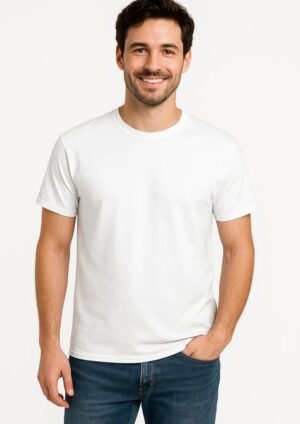
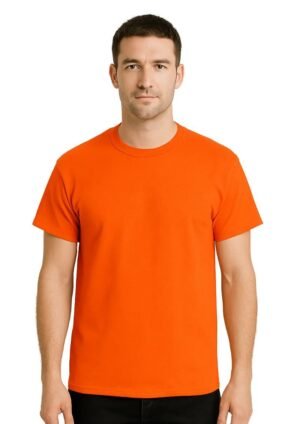
Gildan G500 Heavy Cotton™ 5.3 oz T-Shirt
$17.99 Select options This product has multiple variants. The options may be chosen on the product page -
Men
Gildan G800 DryBlend® T-Shirt
$23.99 Select options This product has multiple variants. The options may be chosen on the product page -
Men
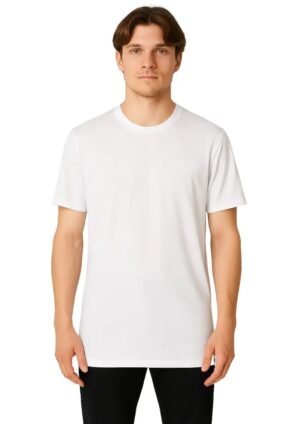
JenPen Unisex Sublimation Shirt – White Polyester T-Shirt for Custom Printing
$17.99 Select options This product has multiple variants. The options may be chosen on the product page -
Men
Premium Bella+Canvas 3001C Unisex T-Shirt
$23.73 Select options This product has multiple variants. The options may be chosen on the product page
Frequently asked questions
Is cotton or polyester better for custom printing?
Neither is better in general; it depends on the print method. Cotton works with DTF, screen printing and vinyl in light and dark colors. White or light polyester is the right base for sublimation and dries fast in the heat. A 50/50 blend sits in the middle and takes DTF, vinyl and screen printing. Choose the fabric first, then the method.
Can you sublimate on a cotton shirt or a 50/50 blend?
Not well. Sublimation dye bonds to polyester, so on cotton the design washes out and on a 50/50 blend only the polyester half holds color, which looks faded. For cotton, blends and dark shirts, DTF is the better method. Use sublimation on white or light polyester and on coated items such as mugs and tumblers.
Which shirt fabric is best for Houston heat?
For long days outside, polyester or a 50/50 blend usually feels better because it dries faster than cotton. Cotton is comfortable for offices, churches and indoor events, but it holds moisture and can feel heavy when you sweat. Keep in mind that sublimation only works on white or light polyester, and dark polyester needs DTF.
Do cotton shirts shrink after printing?
Cotton can shrink a little, even when it is preshrunk, mostly from hot water and a hot dryer. Printing itself is not the cause. Turn the shirt inside out, wash cold on a gentle cycle, dry on low heat or hang it, and avoid ironing directly over the print. Polyester and blends shrink less.
Can you print on a black polyester shirt?
Yes, with DTF or vinyl. Sublimation will not show on a black or dark polyester shirt because the dyes are transparent and there is no white dye. That makes our black polyester tee a fit for a lightweight, quick-drying black shirt with a DTF design.
Does a 50/50 blend print as well as 100% cotton?
Yes for DTF, screen printing and vinyl. The print itself works the same way; what changes is the shirt. A blend feels a little lighter, dries faster and shrinks less, while 100% cotton feels softer and more classic. Sublimation is the exception: it needs polyester and gives faded color on a blend.
Practical guides from our studio in Houston, Texas. We prepare your print-ready file, show you a mockup and print nothing until you approve it. Questions? Message us in English or Spanish. About us
More guides for you

Custom Hoodies: How to Choose a Hoodie or Sweatshirt to Print On
How to choose between a hoodie and a crewneck for custom printing, with a comparison of the fleece models we list, print placement around the pocket and drawcords, youth sizes and group-order tips.
How to Care for Sublimated Tumblers and Mugs So the Print Lasts
How to wash, dry and protect sublimated tumblers and mugs so the design stays sharp, with a care table by piece, tips for lids and stains, and a care card for gifts.
How to Wash Custom Printed Shirts So the Design Lasts
A step-by-step routine for washing printed shirts, what changes for DTF, vinyl, screen printing, sublimation and embroidery, and a care card you can copy for gifts.
Tell us your idea — we make it real
Send your design, your idea or just a description. We prepare the file at the right size and personalize it for you — in English or Spanish, by message or on WhatsApp.