Trucking Company Apparel: Drivers, Dispatch and Brand Trust
A practical guide to trucking company apparel in Houston: what each role wears, how to handle hi-vis and site rules, what to print and where, and how to keep a fleet outfitted as drivers come and go.
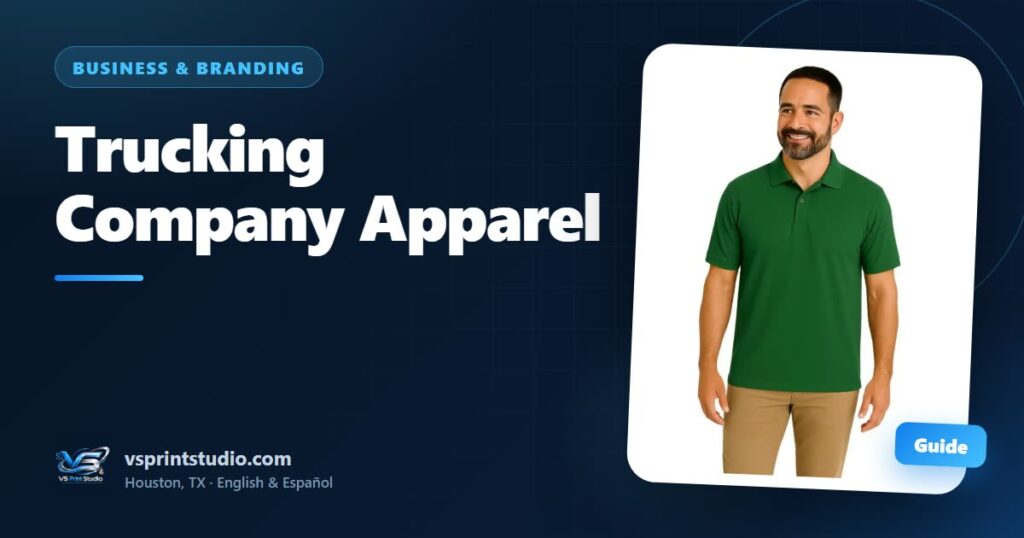
The short answer: a trucking company does best with a short list of apparel: a durable tee for drivers, a polo for dispatch and the office, a hoodie for cool mornings and a cap, all carrying one consistent logo. Add high-visibility clothing only where a customer or site requires it, and check what they require before you buy. Put the company name and phone number on the back, keep the logo on the left chest, and your trucking company apparel does its job: your drivers are easy to recognize at the dock and your company is easy to remember.
This guide is for Houston fleets, owner-operators, dispatch teams and recruiters. It covers what each role wears, how to handle site rules, what to print and where, how to make apparel last through heat and shared dryers, and how to keep it organized when drivers come and go.
Why does a trucking company need branded apparel?
Houston moves a lot of freight. Drivers pass through port terminals, rail yards, warehouses and distribution centers, and at every stop they are the face of your company. A guard at a gate, a dock supervisor or a receiving clerk may see your driver for only a few minutes. A clean shirt or cap with your name on it tells them who sent the truck.
Apparel also helps in quieter ways:
- Recognition. Yard and dock staff can tell your drivers from other carriers at a glance.
- Teamwork. Office, dispatch and drivers look like one company, even when they rarely meet.
- Recruiting. A shirt and a cap make a simple welcome kit for a new driver.
- Consistency. When customers see the same name on the truck, the business card and the shirt, it sticks.
A shirt will not make a carrier reliable. It makes a reliable carrier easier to recognize.
What should drivers, dispatch and the shop wear?
Start from the role, then pick the garment. Houston is hot and humid for much of the year, and cold fronts bring short, mild winters, so the list below covers both.
| Role | Good starting point | Why | Decoration |
|---|---|---|---|
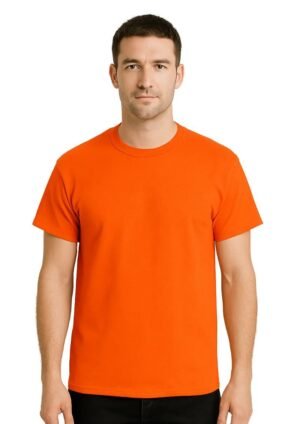
| Drivers | Gildan G800 DryBlend 50/50 tee or Gildan G500 Heavy Cotton | The blend dries faster in heat. Cotton is soft and sturdy but holds sweat | Logo on the left chest, company name and phone on the back |
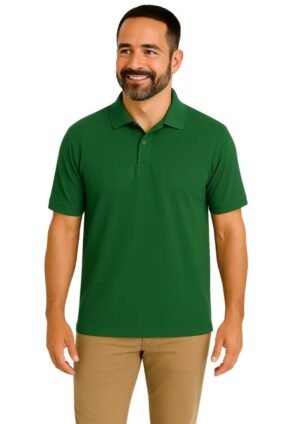
| Dispatch and office | Piqué polo | A dressier look for people who deal with customers and brokers | Embroidered logo on the left chest |
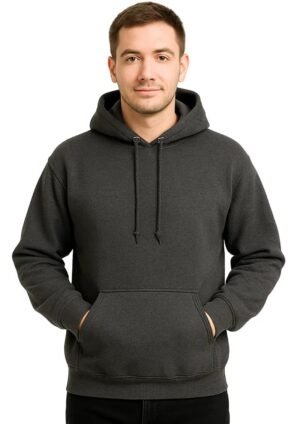
| Cool mornings, any role | Gildan G185 hoodie | The cool season is short and mild, so a mid-weight fleece is usually enough | Small chest logo, bigger back print |
| Yard, shop and anyone outside | Cap | Shade, and a second place for your logo | Embroidery; see custom hats and caps |
| Owner, recruiters, sales | Polo and cap | They represent the company at meetings and hiring events | Embroidery |
Dark colors hide grease and road grime, but they are harder to see in low light. If drivers walk through dark yards at night, ask the site about its visibility rules before you settle on a dark shirt. Fabric content and colors vary by model, so read each product page. Our guide to cotton vs polyester vs blends explains the fabrics.
Hi-vis and site rules: what to confirm before you order
Some docks, yards and terminals require high-visibility clothing, and some do not. The rule comes from the customer or the site, not from us, and it can differ from one location to the next. A bright shirt is not the same as a garment sold with a safety rating, so do not assume one meets a requirement.
Ask these questions first, in writing if you can:
| Question | Who can answer it |
|---|---|
| Is high-visibility clothing required for drivers at your site? | The customer’s site rules, safety contact or onboarding packet |
| Which garment, color and rating? | The same source |
| Can a company logo be added, and where? | The garment’s maker and the site safety contact |
| Does the rule change by area, task or time of day? | The site safety contact |
We print and embroider on the garment you choose. We do not certify or rate safety apparel. If you need a rated garment, confirm the requirement first and message us before you buy, so we can tell you what we can decorate on it. Our guide to construction crew uniforms covers the same questions for job sites.
What should you print, and where?
These are our print widths on adult unisex shirts:
| Placement | Print width | What usually goes there |
|---|---|---|
| Left chest | 3.5 in on S and M, 4 in on L to 3XL | Company logo |
| Back | 10.5 in on S, rising to 14 in on 3XL | Company name and phone number, or a bigger logo |
| Sleeve | 3 in on S and M, 3.5 in on L to 3XL | A small mark |
| Cap front | We confirm the size for each cap | Embroidered logo or company name |
Height follows the artwork, and women’s cuts have smaller print areas, so we confirm the exact size for every item. Send one logo and we prepare the file for each size. The T-shirt print size chart lists every width.
A few choices are specific to trucking:
- Truck or unit numbers. A number on the sleeve can help yard and dispatch staff match a driver to a truck. It goes out of date when the driver changes trucks, so use it only if drivers keep the same truck.
- DOT and MC numbers. Some companies add them. That is your call. Copy the numbers from your own paperwork, send them as text and check every digit, because a typo is permanent once it is on a shirt. If a customer or program asks drivers to wear specific identification, follow their instructions and send us the exact text.
- Driver names. A first name is easy to keep current and helps dock staff address the driver. A different name on every shirt is fine.
- Phone number. Use the company line on the back, not a personal number.
How do you make apparel last through heat, miles and shared dryers?
A driver’s shirt is washed often and not always gently. Local drivers go home to their own machines, but long-haul drivers may wash on the road in machines they do not control. Sitting for hours also rubs the chest where the seat belt crosses and the back against the seat. These choices help:
- Match the method to the garment. Embroidery on polos and caps handles heavy use well. DTF or vinyl on tees works when the shirt is washed inside out, cold, and dried on low heat. For a large run of one design, screen printing may be the better route, and we recommend a method when we quote.
- Give every driver a care card. Inside out, cold, gentle, no bleach or fabric softener, low heat or hang to dry, and never iron directly over a print. Our guide to washing custom printed shirts has the details.
- Keep prints out of a hot, closed cab. A closed vehicle in a Houston summer gets hot enough to matter, and heat is the main enemy of a print.
- Plan spares. Road days are hard on clothes, so add a spare shirt or two to each driver’s kit.
How do you roll out apparel across a fleet with turnover?
Treat apparel like any other onboarding item: a list, a kit and a reorder routine.
- List the roles. Drivers, dispatch, shop and yard, office, owners and recruiters rarely need the same pieces.
- Build a kit for each role. For a driver it might be several tees, a hoodie and a cap. Count the days between laundry stops, because that decides how many tees a driver needs.
- Keep one roster with name, role, cut, size, start date and what was issued. Ask for the cut and size at orientation.
- Order in batches. Add new drivers to a list and order when a few have joined, instead of one shirt at a time.
- Reorder from the approved mockup. Blank shirts can change or run out, so we confirm that the same model and color are available. A few spares in your most common sizes cover surprises.
- Use both languages if your crew does. Many Houston crews work in English and Spanish. Size forms, care cards and orientation notes can be bilingual, and we answer in English or Spanish.
Our employee uniform program checklist goes through the same routine for any small business, and how many of each size to order helps with the count.
Business cards for drivers, owner-operators and recruiters
In trucking, phone numbers change hands all day. Dispatchers, brokers, shippers and receivers all need a quick way to reach the right person, and a card is faster than spelling a number out loud. A standard card is 3.5 x 2 in, so keep it simple: name, role, company, phone or WhatsApp, email and, if you want it, your DOT or MC number. A QR code or a digital vCard saves people from typing.
See our business card size and design guide, the 1000 standard business cards and digital vCard vs paper business card. If you hire at job fairs, a 4 x 6 in flyer with a QR code to your application page is an easy handout. The flyer size and design guide shows how to lay it out.
How we can help with fleet apparel
Tell us your roles and what you have: a finished logo, an idea or nothing yet. We prepare the print-ready or stitch file, show you a mockup and print nothing until you approve it. Mixed sizes and different roles can share one order. Start with our page on printing for trucking companies or see how bulk orders work. We serve Houston and nearby cities such as Pasadena, Channelview, Galena Park, Jacinto City and Baytown, and we ship across the U.S. You can write to us in English or Spanish.
Most standard orders are ready in 2–5 business days after you approve the design. Larger or more complex orders may need more time, and the quote confirms the date. Shipping adds carrier time.
Before you order: fleet apparel checklist
- I know which roles need apparel and what each one wears
- I asked my customers or sites whether high-visibility clothing is required
- I chose an easy-wash tee for drivers and a polo for dispatch, plus a cap and a hoodie if needed
- My logo goes on the left chest, and the company name and phone number go on the back
- Any DOT, MC or truck numbers are copied from my own paperwork and double-checked
- I have a roster with name, role, cut and size
- I have a kit for new drivers and a routine for reorders
- I have a care card, in both languages if needed
- I know the date I need it and who approves the mockup
Products mentioned in this guide
-
Polo Shirt
Piqué Classic Polo Shirt for Men – Casual and Formal Wear with Breathable Fabric
$26.99 Select options This product has multiple variants. The options may be chosen on the product page -
Men
Gildan G800 DryBlend® T-Shirt
$23.99 Select options This product has multiple variants. The options may be chosen on the product page -
Hoodie
Gildan G185 Heavy Blend™ Adult Hooded Sweatshirt
$26.99 Select options This product has multiple variants. The options may be chosen on the product page

Frequently asked questions
What should truck drivers wear as a company uniform?
A durable, easy-wash tee in a dark color is the usual starting point, with the logo on the left chest and the company name and phone number on the back. Add a cap, and a hoodie for cool mornings. Dispatch and office staff usually wear an embroidered polo. If a customer requires high-visibility clothing, confirm the rule with them first.
Do trucking companies have to use hi-vis shirts?
It depends on the customer or the site, and it can differ from one location to the next. Confirm what is required with each site's safety contact before you buy. We print and embroider on the garment you choose, and we do not certify or rate safety apparel.
Should I put DOT and MC numbers on trucking company apparel?
That is your choice. Many companies print only the logo and company name. If you want the numbers, copy them from your own paperwork, send them as text and check every digit, because a typo is permanent once it is on a shirt. If a customer asks for specific identification, follow their instructions.
Where should a trucking company logo go on a shirt?
Put the logo on the left chest, 3.5 in wide on S and M and 4 in on L to 3XL, and the company name and phone number across the back, up to 14 in wide on a 3XL. A small mark on the sleeve is optional. Caps carry an embroidered logo on the front, and we confirm the size.
Is embroidery or printing better for drivers?
Embroidery on polos and caps handles heavy use very well. Printing with DTF or vinyl suits tees and hoodies and carries fine detail. Both last longest when washed inside out in cold water and dried on low heat. For a large run of one design, screen printing may fit, and we recommend a method when we quote.
How do I order shirts for drivers when the team keeps changing?
Keep a roster with name, role, cut and size, ask new drivers for their size at orientation and order in batches. Send the mockup you approved last time when you reorder, and we confirm that the same model and color are still available. Mixed sizes and names are welcome.
Practical guides from our studio in Houston, Texas. We prepare your print-ready file, show you a mockup and print nothing until you approve it. Questions? Message us in English or Spanish. About us
More guides for you

Digital Business Card vs Paper Business Card: Do You Need Both?
A digital vCard is easy to share and update, and a printed card works with no phone at all. See how they compare, when each one wins and how to combine them with a QR code.
Flyer Design Tips: How to Make a 4×6 Flyer People Actually Read
A standard flyer is 4 x 6 inches. This guide covers the file size, a layout that works, simple copy, bilingual and QR code tips, and where to hand out flyers around Houston.

Cleaning Business Uniforms: What to Choose and How to Brand Them
How to uniform a cleaning crew in Houston: the best shirts for the heat, colors that hide everyday dirt, where the logo and phone number go, extras like caps and cards, and a sample spec to copy.
Tell us your idea — we make it real
Send your design, your idea or just a description. We prepare the file at the right size and personalize it for you — in English or Spanish, by message or on WhatsApp.